
Was Darth Vader’s suit expensive to create?
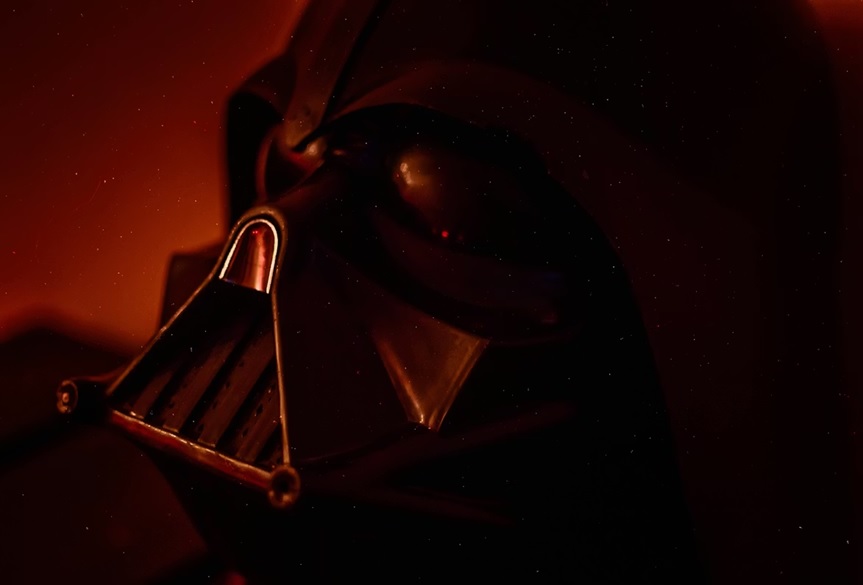
Darth Vader is one of the most recognisable characters in cinema, but behind the imposing silhouette and mechanical breathing lies a surprisingly practical question. If someone tried to construct his armour in the real world using current technology, materials and engineering, what sort of price tag would it carry? Fans often ask How much would Vader’s suit actually cost to build? and while we cannot pin down an exact figure, we can explore the components, technology and craftsmanship involved to reach a plausible estimate.
Materials and armour components
Vader’s armour looks heavy and metallic, but its closest real world equivalent would be a combination of advanced composites, high impact polymers and lightweight metal alloys. Modern ballistic armour provides a useful comparison. A full set of military grade body armour with maximum coverage can already exceed several thousand pounds, and that is without custom shaping, integrated electronics or life support interfaces.
To match Vader’s durability and flexibility, each plate would need to be custom forged or cast. Bespoke armour creation sits somewhere between high end engineering and couture. A single custom build for film or military research can easily reach five figures. The chest and shoulder plates alone, especially with carbon fibre reinforcement and titanium elements, could stretch towards twenty thousand pounds.
The bodysuit beneath the armour is rarely discussed, but it would need to be fire resistant, breathable and embedded with cooling channels. Advanced flight suits and racing suits with similar properties can cost several thousand pounds before any electronics are added. When considering a complete system layered for protection, heat control and movement, we are already looking at a significant investment.
The helmet and life support systems
The helmet is the heart of the entire design. Vader’s survival depends on respiratory machinery, filtration systems, vision enhancement, sound processing and reinforced protection around the head and neck. Building such a helmet today would require miniaturised medical technology comparable to portable ventilators, combined with heads up display features used by fighter pilots.
A compact ventilator alone can cost tens of thousands of pounds, and it would then need to be integrated with sensors, voice modulators and protective shelling. Helmet mounted displays and tactical vision systems can add several more thousand. Once everything is adapted to fit within a single custom moulded helmet, the cost rises sharply. It is not unreasonable to imagine the helmet reaching or surpassing the fifty thousand pound mark.
Add to this the control panel on Vader’s chest, which appears to regulate his breathing and monitor his health. A modern medical monitoring system with robust casing and wireless integration could add several thousand pounds more. The cables, power packs and cooling systems running inside the suit would further increase the total.
Robotics and mobility support
Vader’s legs and arms are heavily augmented. In the real world this would require prosthetic engineering of the highest quality. Cutting edge robotic prosthetics equipped with sensors, stabilisation technology and motor assistance already cost tens of thousands each. A full set of limbs with advanced articulation could realistically reach into six figures.
The suit also restricts and supports Vader’s movements, almost functioning as an exoskeleton. Military and industrial exoskeleton prototypes today run from fifty thousand to well over a hundred thousand pounds depending on complexity. If the aim were to replicate Vader’s strength, stability and mechanical movement precisely, we would need a fully powered system with rigorous safety testing and emergency override functions.
All of this technology must also operate together. Integrating multiple systems into one functional unit is often the most expensive part of any engineering project. Software, calibration and fine tuning would likely add months of work for a specialised team.
The final estimated cost
Taking all of this into account, the cost of building a realistic Vader suit in the current world would be astonishingly high. A conservative estimate puts the materials at tens of thousands, the electronics at well over one hundred thousand, and the prosthetics and exoskeleton at several hundred thousand more. Factoring in research, development and labour from engineers, medical technologists and fabricators, the final figure could easily sit somewhere between half a million and one million pounds.
So how much would Vader’s suit actually cost to build? It depends on choices made along the way, but it would undoubtedly be one of the most expensive personal systems ever created. When we consider the level of life support, protection and mobility enhancement packed into every inch of the armour, it becomes clear that Vader is not merely intimidating because of his presence. He is walking around in a masterpiece of engineering, a frightening mixture of technology and necessity.
In the end, the true expense is part of what makes the character so compelling. Vader’s suit is not only armour but a reminder of the price he pays to live inside it, a fusion of machine and man held together by immense effort and unimaginable cost.